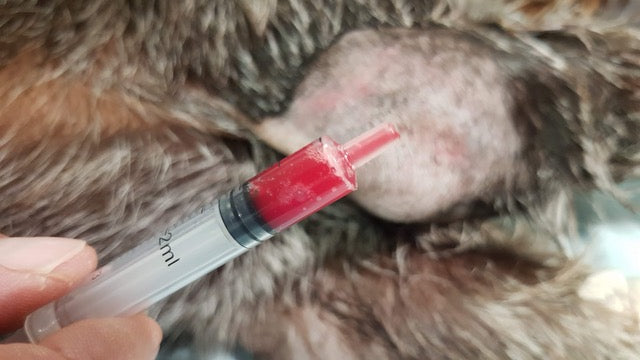
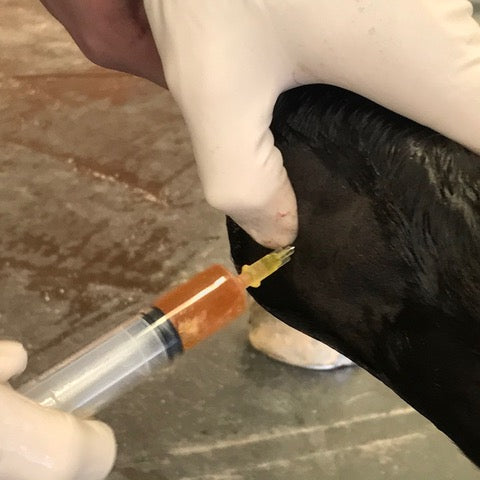
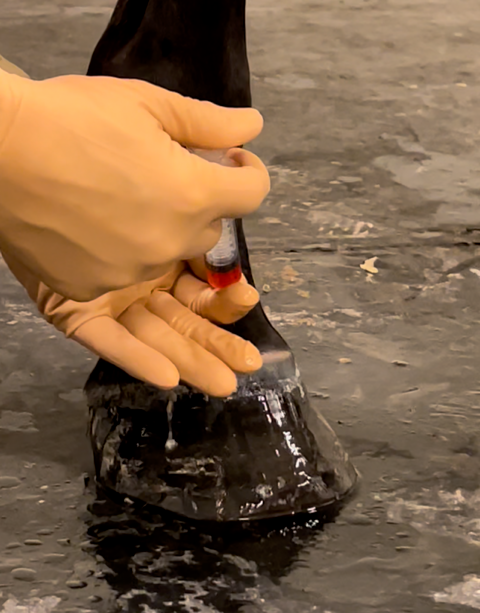
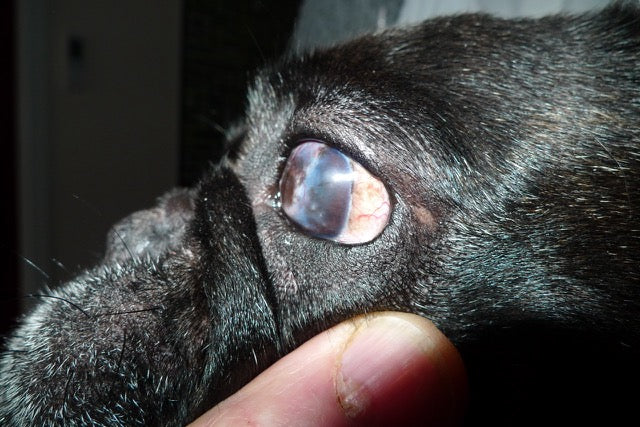
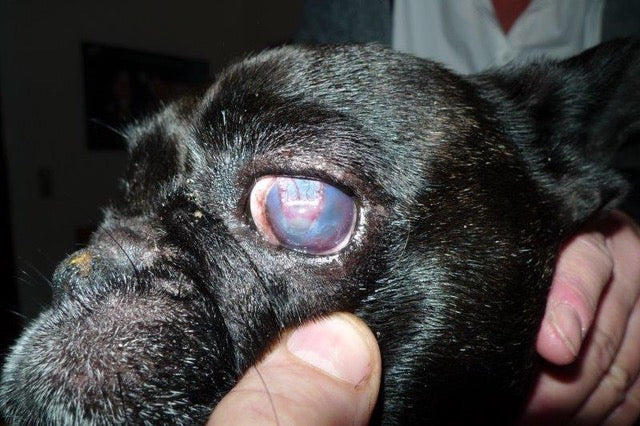
The healing of corneal ulcers can be challenging, as the cornea is avascular and therefore depends on the surrounding tissue for the supply of oxygen, nutrients and growth factors. In larger or deeper ulcers, this limited blood supply can prolong the healing process. PRF can create a more optimal environment for tissue healing by locally supplying a fibrin matrix with platelets, leukocytes and growth factors.
The PRF membrane acts both as a biological scaffold that supports the migration of epithelial cells, and as a depot that gradually releases growth factors over several days. This can stimulate repair and contribute to a more controlled inflammatory response, which overall can promote healing and reduce the risk of further tissue damage.
Studies in both dogs and horses have shown promising results in the treatment of corneal ulcers with PRF. Two studies published in 2023 (Baadsgaard Bruun et al.) (Hosny et al.) conclude that PRF is a safe and effective supplementary treatment method that can shorten healing time, improve wound healing and reduce the risk of complications compared with conventional treatment alone.
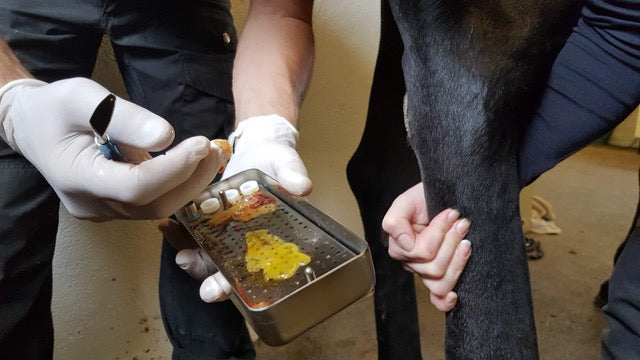
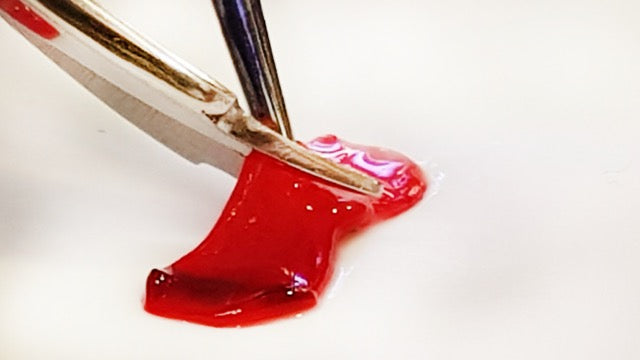
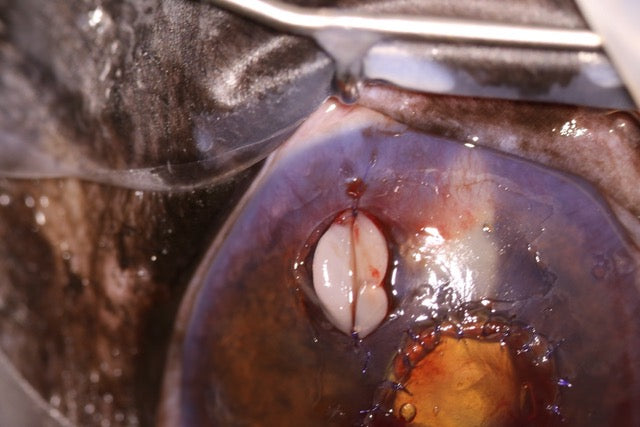
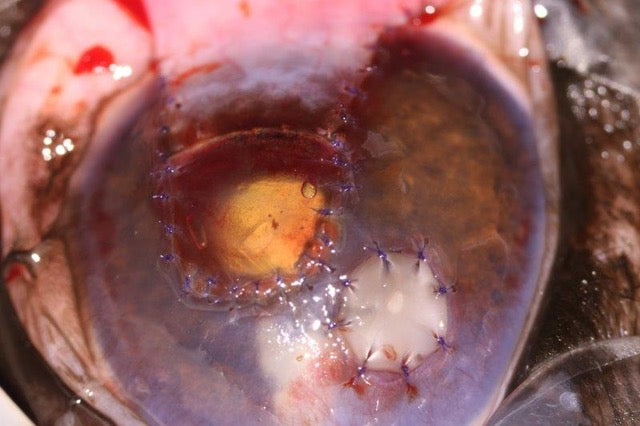
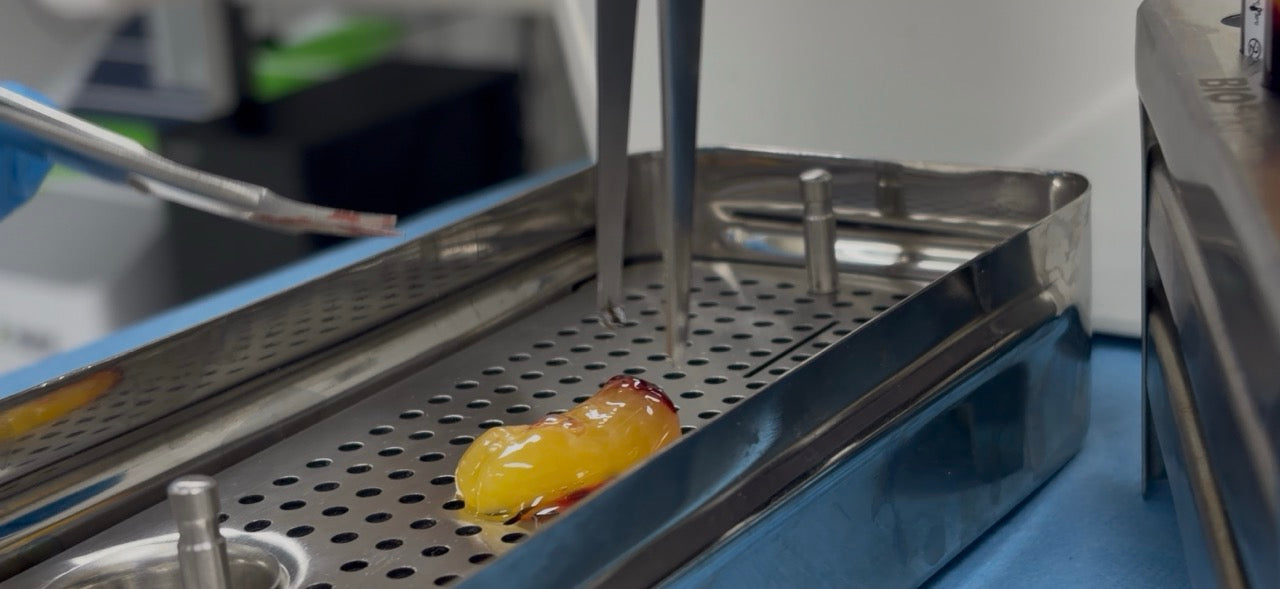
PRF can be produced as a membrane that is adapted to the size of the corneal ulcer and placed directly on the lesion. The membrane is typically fixed with sutures or protected with a temporary tarsorrhaphy so that it is held stable over the ulcer during healing. In this way PRF acts both as a biological dressing and as a local source of growth factors that support the tissue's natural regeneration process.