Immediate implants in regions 12 and 11
Dual-zone augmentation with maxgraft® granules in immediate implant placement.
See the case ↗ (opens in a new window)
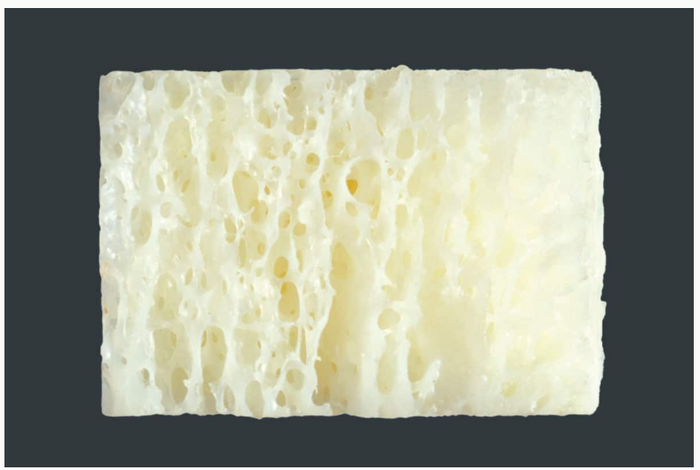
Allografts are processed human donor bone and a well-documented choice for bone augmentation. The material has the natural bone structure and the preserved collagen and, over time, remodels into the patient’s own bone.
The advantage is that no bone has to be harvested from the patient – saving operating time, pain and the risk of complications. We supply allografts from two tissue banks: maxgraft® from botiss, processed at C+TBA in Austria, and DIZG in Berlin, with whom we have worked since 2015.

All product families in the category with sizes and prices. Click a size to go straight to the product.
 DIZG allograft granulesDIZGFreeze-dried granules of human donor bone from the non-profit DIZG tissue bank in Berlin – as cortical or cortico-cancellous particles in several grain sizes.
DIZG Cortical Spongiosa
DIZG Cortical
Cortical-cancellous granules
Cortical granules
 DIZG blocks and platesDIZGBlocks and plates of human donor bone from DIZG in Berlin – bi- and tricortical blocks, J- and C-shaped blocks as well as cortical struts and a femur plate.
DIZG knogleblokke
DIZG Femur Plate
DIZG Cortical Strut
 maxgraft® granulesbotiss biomaterialsHuman donor bone from the C+TBA tissue bank in Austria, processed with the Allotec® process. The natural bone structure and the preserved collagen make the granules a scaffold that remodels into the patient’s own bone.
 maxgraft® +HyAbotiss biomaterialsmaxgraft® granules with added sodium hyaluronate. Hydrated with saline or blood, it forms a cohesive ‘sticky bone’ that is easy to place and shape in the defect.
maxgraft® cortico-cancellous +HyA
maxgraft® +HyA
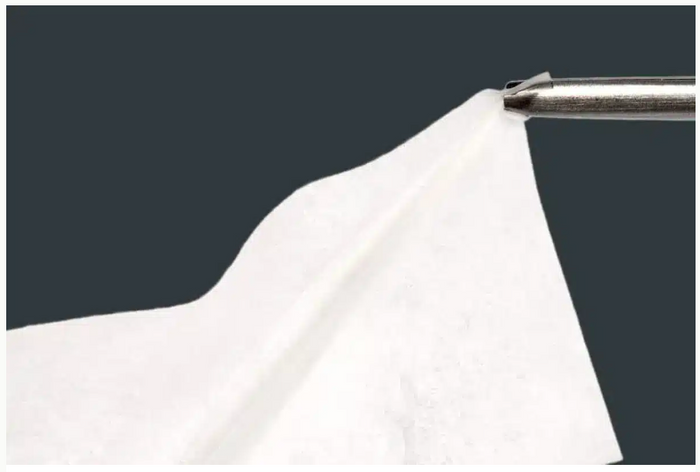
 maxgraft® corticobotiss biomaterialsThin cortical plate (25 × 10 × 1 mm) of human donor bone for the allogeneic shell technique: the plate forms a biological ‘container’ that is filled with particulate material.
 maxgraft® bonebuilderbotiss biomaterialsPatient-specific bone block of human donor bone, milled according to preoperative 3D planning. The block fits the defect, so manual adjustment is usually unnecessary.
 maxgraft® blocks and boneringbotiss biomaterialsCancellous and uni-cortical blocks of human donor bone for three-dimensional augmentation – and bonering, which makes it possible to augment and place the implant in the same session (Bone Ring Technique).
maxgraft® bonering
maxgraft® blocks
At the C+TBA tissue bank, the donor bone is processed in six steps that clean the tissue and preserve the natural bone structure.
After mechanical removal of soft tissue, fat and cartilage, the tissue is given its final shape, e.g. block, granules or cylinder.
Ultrasonic cleaning removes blood as well as cell and tissue components and loosens fat from the trabecular structure of the bone, so that the reagents in the following steps can penetrate.
Repeated rinsing with diethyl ether and ethanol dissolves cellular components and denatures non-collagenous proteins. Any viruses are inactivated and bacteria are destroyed.
Hydrogen peroxide denatures the remaining soluble proteins and reduces antigenicity to a minimum. The collagen matrix remains intact.
Lyophilisation gently removes the water and preserves the structure of the tissue. Residual moisture of no more than 10 % and double packaging give a shelf life of up to five years at room temperature.
A final, tissue-preserving irradiation at low temperature – together with the preceding cleaning steps – gives a sterility assurance level (SAL) of 10⁻⁶.
Use the filters to find the right size, volume and variant.
maxgraft® cortico-cancellous granules, 0.5 cc + Hya, 0.25 - 1.0 mm
34005S
maxgraft® cortico-cancellous granules, 1.0 cc + Hya, 0.25 mm
34010XS
maxgraft® cortico-cancellous granules, 1.0 cc + Hya, 0.25 - 1.0 mm
34010S
maxgraft® cortico-cancellous granules, 2.0 cc + Hya, 0.25 - 1.0 mm
34020S
maxgraft® cortico-cancellous granules, 0.5 cc + Hya, 0.25 mm
34005XS
Cases and catalogues from the manufacturers – for inspiration and as a basis for choosing materials.
Dual-zone augmentation with maxgraft® granules in immediate implant placement.
See the case ↗ (opens in a new window)
Ridge preservation with maxgraft® granules covered by a permamem® membrane.
See the case ↗ (opens in a new window)
Reconstruction of hard and soft tissue in peri-implantitis with maxgraft®.
See the case ↗ (opens in a new window)
A range put together from recognised manufacturers – with advice from people who know the products.
70
Products
Granules, blocks, membranes, matrices and haemostatics
7
Product families
Compare them in the selector above
2
Manufacturers
Selected for documentation and quality
What is typically part of the same treatment.
We are happy to advise on choice of materials, sizes and combinations – call or write and we will get back to you quickly.

We use cookies to keep the store working, to understand how it is used, and to send relevant newsletters. We do not sell your data and we do not share it with ad networks.
You can change or withdraw your choice at any time via "Cookie settings" at the bottom of the page. See the full cookie overview.
Scanned on the store’s own page types. Every entry has a real purpose.
| Name | Purpose | Lifetime |
|---|---|---|
| cart_currency | Remembers which currency the cart calculates in | 14 days |
| _shopify_essential | Keeps checkout and payment working | 1 year |
| _shop_app_essential | Preserves the cart across Shop Pay | 1 year |
| _shopify_test | Checks whether the browser allows cookies at all | Session |
| signInWithShop:cartSync… | Syncs the cart with Shop Pay | Persistent |
| bss-login-session-id | Controls access to the locked B2B pages | Session |
| themeJsAutoReload | Reloads the page once if the theme fails | Session |
| Name | Purpose | Lifetime |
|---|---|---|
| localization | Remembers your language and time zone | 1 year |
| Concept:filters-toggle | Remembers whether product filters are open | Persistent |
| Concept:recently-viewed | Remembers the products you last viewed | Persistent |
| lyst-customerGuid | Ties your wishlist to this browser | Persistent |
| Name | Purpose | Lifetime |
|---|---|---|
| _shopify_y | Distinguishes returning from new visitors | 1 year |
| _shopify_s | Measures a single visit so we can count sessions | 1 day |
| shopify_client_id | Aggregates page views for store statistics | 1 year |
| _shopify_sa_t / _shopify_sa_p | Records which page and source a purchase came from | 30 minutes |
| _ga | Google Analytics: distinguishes visitors, via the Google & YouTube app | 13 months |
| _ga_MDYP6HWQZZ | Google Analytics: keeps your session state for Google Merchant Center | 13 months |
| Name | Purpose | Lifetime |
|---|---|---|
| __kla_id | Links your activity to your Klaviyo newsletter | 2 years |
| __kl_key | Identifies you to Klaviyo’s forms | Persistent |
| __kla_viewed | Remembers products you viewed, for the newsletter | Persistent |
| klaviyoOnsite | Tracks whether you already subscribed | Persistent |
| $referrer / $last_referrer | Remembers where you came from, for the newsletter | Persistent |
| _shopify_marketing | Measures which channel brought you here | 1 year |
Videos are replaced by a still image. YouTube is contacted only once you press play — and only then are these set.
| Name | Purpose | Lifetime |
|---|---|---|
| VISITOR_INFO1_LIVE | Estimates your bandwidth for the player | 180 days |
| YSC | Counts which videos you have watched | Session |
| __Secure-YEC / __Secure-YNID | Remembers your player preferences | 180 days |
| yt-player-… / ytidb-… | YouTube’s own player and log data | Persistent |
Your consent is stored by Shopify and directly controls whether a tracking pixel may load at all. No third party is involved in the consent itself.